
In this article, you will find instructions on setting up your Mobile App. Explore insights on creating a captivating introduction, customizing the app's name and icon, crafting an enticing splash screen, refining the Sign-in/Sign-up experience, optimizing Learner Tools, and seamlessly integrating third-party services.
1. Log In to your school account and navigate to the Mobile App tab.
2. Select the App Settings option.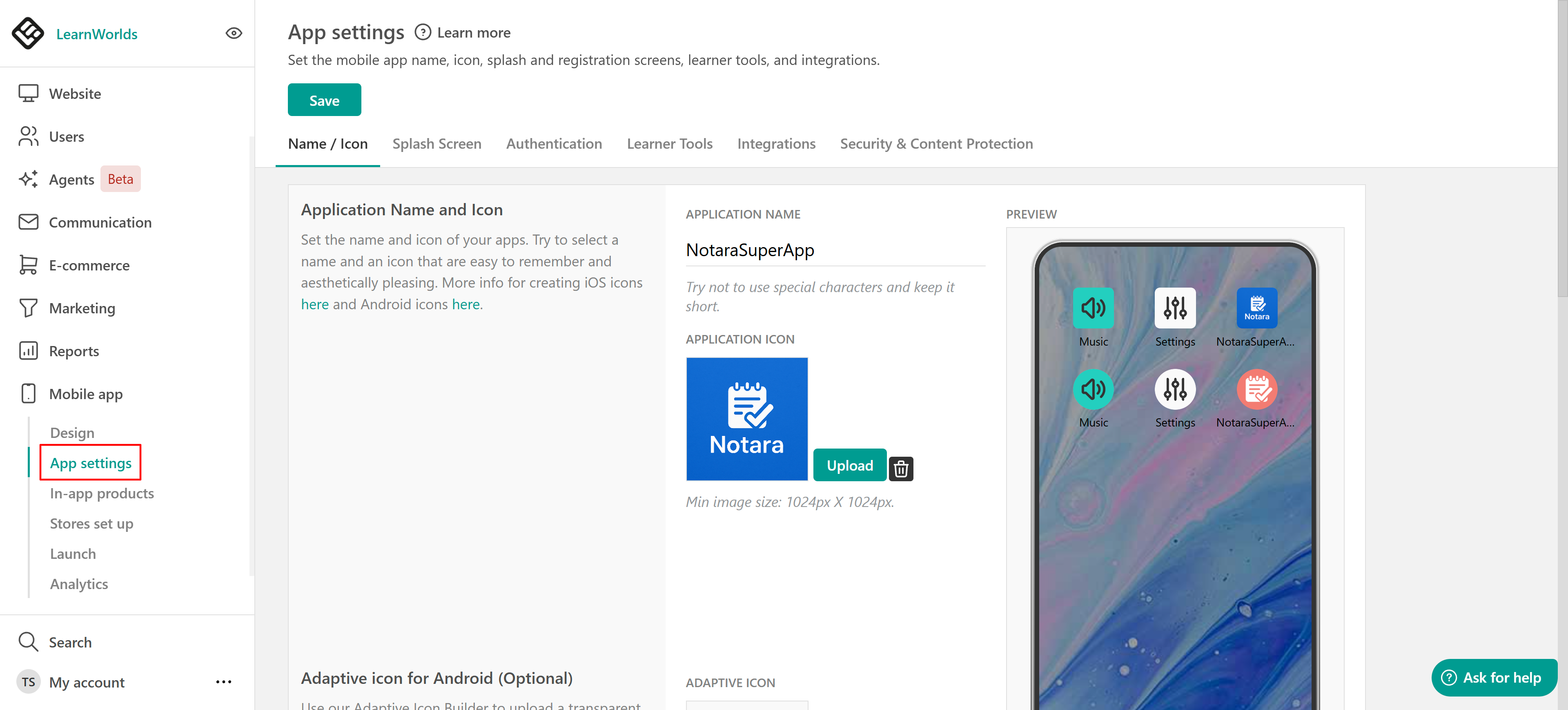
Each tab allows you to view and/or change different aspects of your App.
Name/Icon
Under the Name / Icon tab, you can customize your mobile app's name and icons to match your brand. You can also configure optional Android icons for different display purposes.
To access these settings, navigate to Mobile app → App settings → Name / Icon.
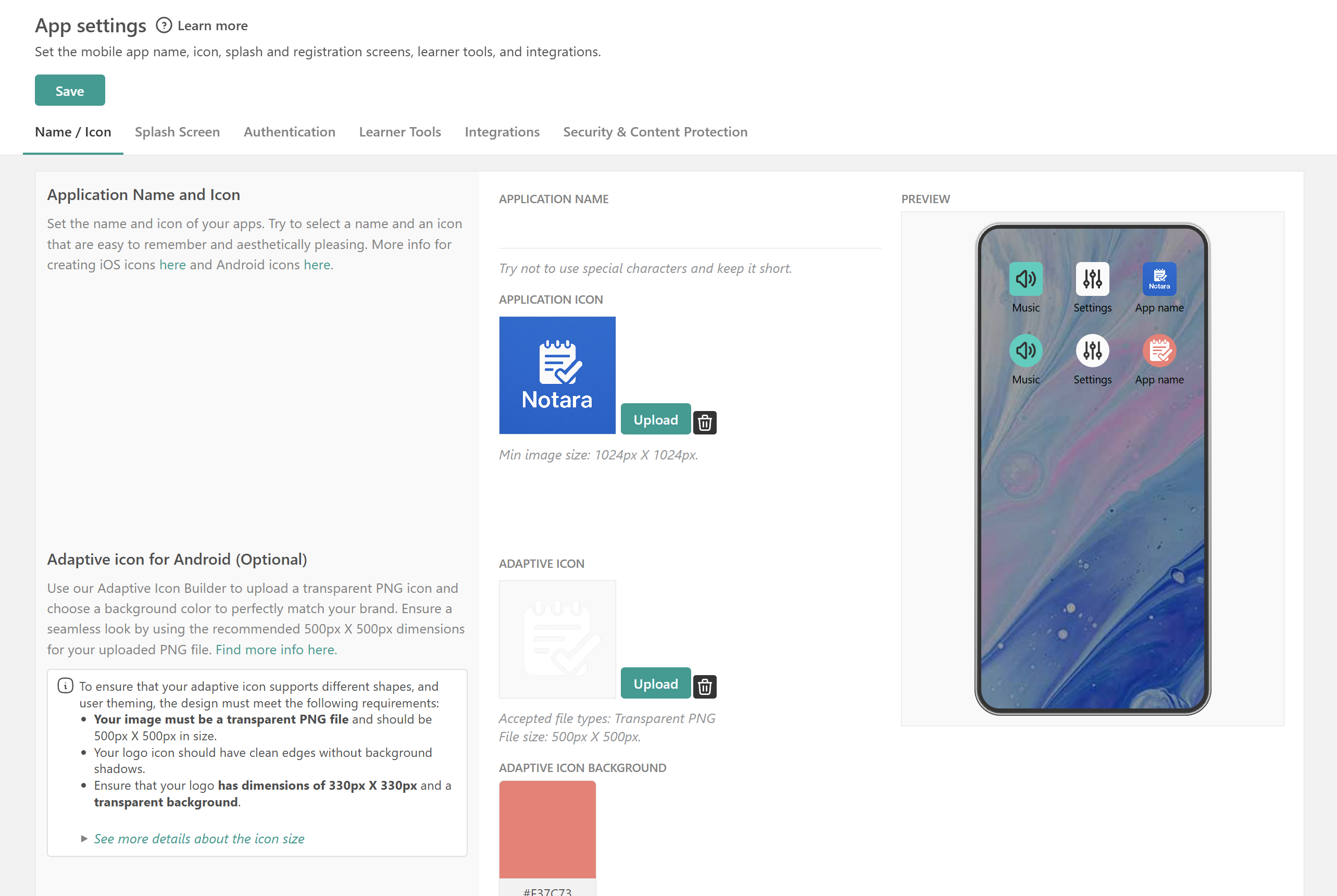
Application name and icon
- Under Application name, enter the name you want to display for your mobile app. Keep it short and avoid special characters.
- Under Application icon, select Upload to add your app icon.
 -The image must come with a colored background, and its dimensions should be 1024 x 1024.
-The app’s name should not contain inappropriate language or special/ accented characters (example: . , # ! & @ $). Only use Latin characters in the app’s name.
You can preview the result on the phone screen located on this page on both Android and iOS (round and square icon version).
Adaptive icon for Android (optional)
Upload an adaptive icon to control how your app icon appears on Android devices with different icon shapes.
- Under Adaptive icon, upload a transparent PNG file measuring 500 × 500 px.
- Make sure your logo has clean edges, without background shadows, and fits within a 330 × 330 px area.
- Under Adaptive icon background, choose the background color you want to use.
Push notification icon for Android devices (optional)
You can also customize the icon displayed in Android push notifications, including the status bar and notification itself.
- Under Notification icon, upload an image with a minimum size of 96 × 96 px.
- Use an icon with an alpha-transparent background so Android can display it correctly.
- Under Notification icon background, choose the background color.
Check the preview on the right to see how the notification icon will appear.
Once you've configured your app name and icons, select Save to apply your changes.
Splash screen
In the Splash screen, you can upload a different logo or banner and change its background color. The splash screen is the first screen your users view upon starting your app. 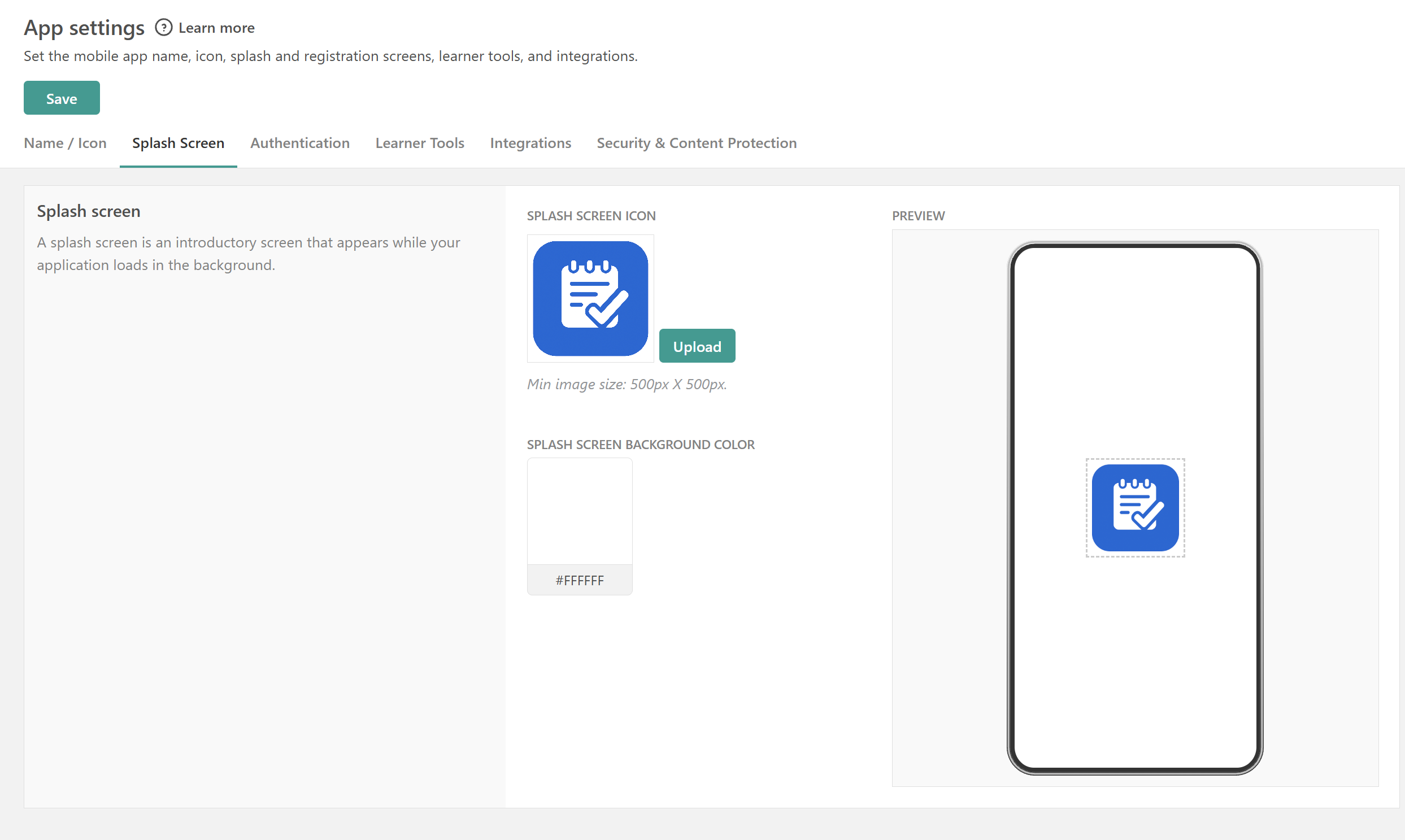
-Keep it simple, not boring: You can use vibrant colors and, of course, your school's logo.-Ensure that the image is at least 500px X 500px.
Authentication
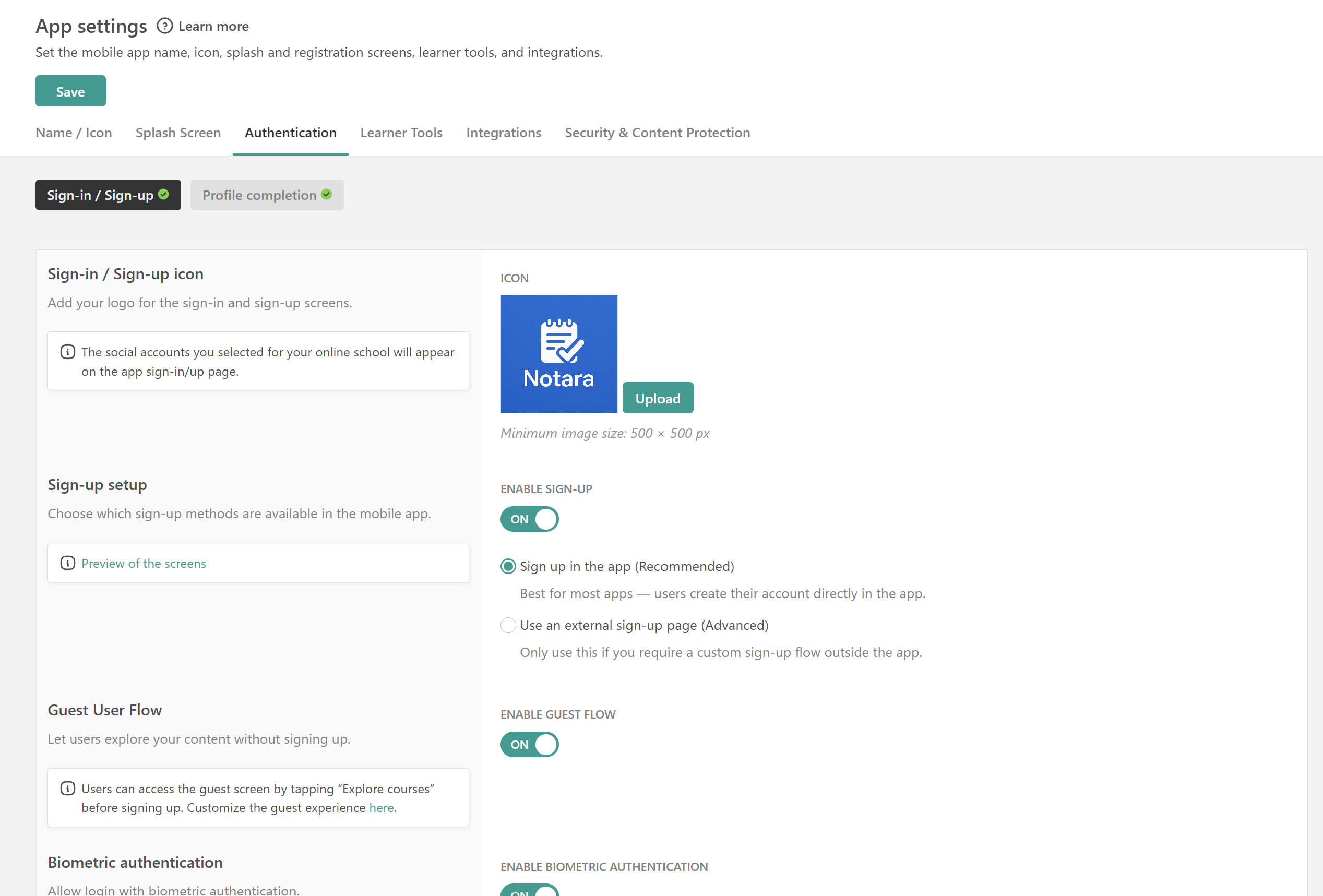
Under Authentication, customize how learners sign in, create accounts, and access your mobile app. The Sign-in / Sign-up tab includes the following options:
- Sign-in / Sign-up icon: Upload an icon for your app's authentication screens. The minimum image size is 500 × 500 px.
- Sign-up setup: Enable sign-up and choose whether learners can register directly in the app or through an external sign-up page.
- Guest User Flow: Allow visitors to explore your app's content before creating an account.
- Biometric authentication: Allow learners to sign in using facial or fingerprint recognition on supported devices.
- Sign-in / Sign-up Preview: Preview how the authentication screens will appear to learners, including the social sign-in options configured for your school.
Under the Profile completion tab, you can configure the information learners need to provide to complete their profiles.
For detailed instructions, see this guide.
Learner tools
In the Learner tools tab, you can enable Learning Reminders, edit the included message, enable Offline Video option or Favorites.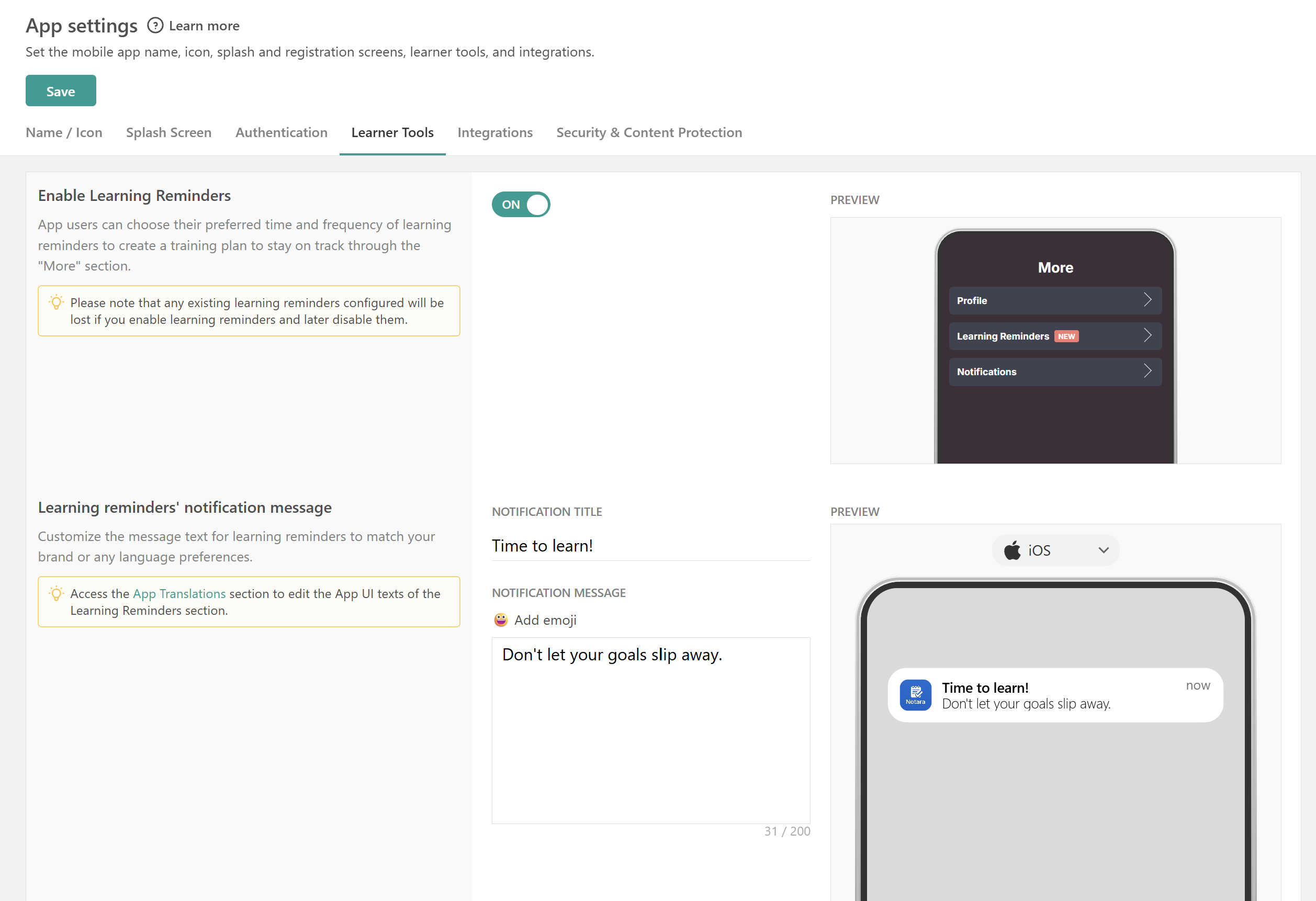
Integrations
In the Integrations tab, you can locate the available integrations like Firebase and Facebook Business SDK
As the admin, you can enable the Guest User Flow, allow your users to explore the available courses without creating an account, and enable biometric authentication. You can find more information on how users can access your app here.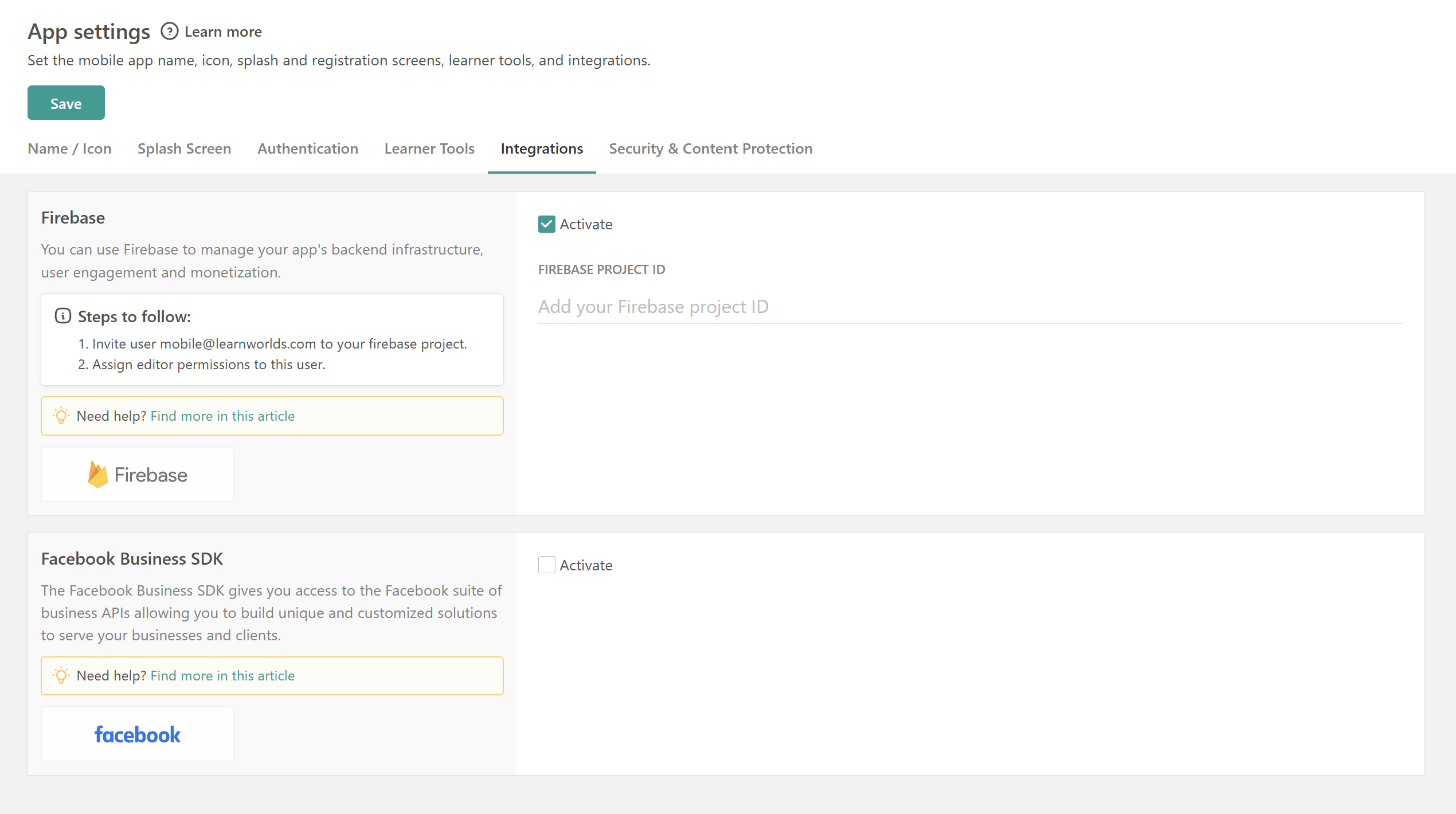
Once you've completed your development work, it's essential to conduct testing on your app. To achieve this, follow the steps in our relevant article.
Security and content protection
Under Security & Content Protection, you can enable screen capture protection to help prevent unauthorized screenshots and screen recordings of your mobile app content. To configure this feature:
1. Turn on Enable screen capture protection.
2. Choose where to apply the protection:
- Course player only: Protect learning content, including videos, PDFs, and interactive activities.
- Entire app: Extend protection to all screens, including the course catalog and community areas.
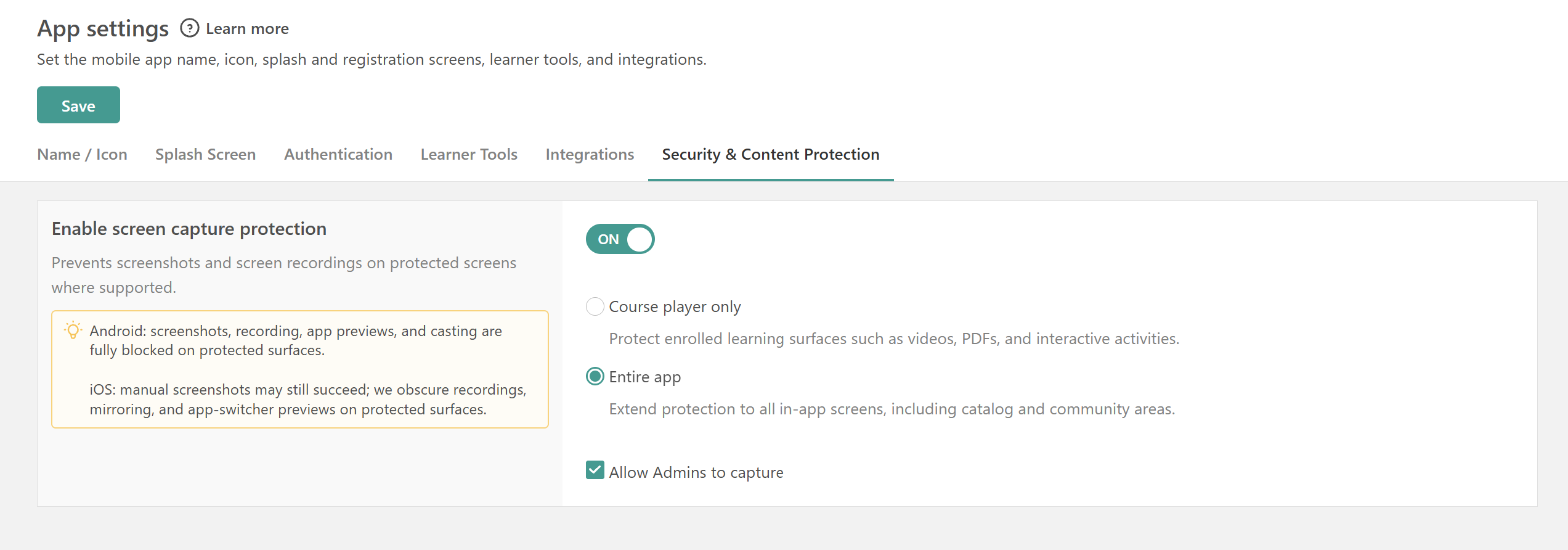
Optionally, select Allow Admins to capture to let administrators capture protected screens.
Select Save to apply your changes.
Screen capture protection works differently depending on the device:- Android: Blocks screenshots, screen recordings, app previews, and screen casting on protected screens.
- iOS: Obscures screen recordings, screen mirroring, and app-switcher previews on protected screens. Manual screenshots may still be possible.