
A Certificate of Completion is awarded when learners meet the completion requirements you define for a course. Depending on your setup, learners may need to complete specific learning activities, finish all exams, complete a percentage of the course, or meet another completion requirement.
This article will guide you through the process of creating and setting up certifications and teach you how to manage them effectively once they have been issued.
Create a certificate of completion
To create a certificate of completion learning activity:
1. Go to Courses → Course manager, navigate to your desired course, and go to Contents → Course outline.
2. Click to Add activity.
3. Under the Certificates category, choose the Certificate of completion type of learning activity.
4. Click Save or Save & Edit to start customizing right away.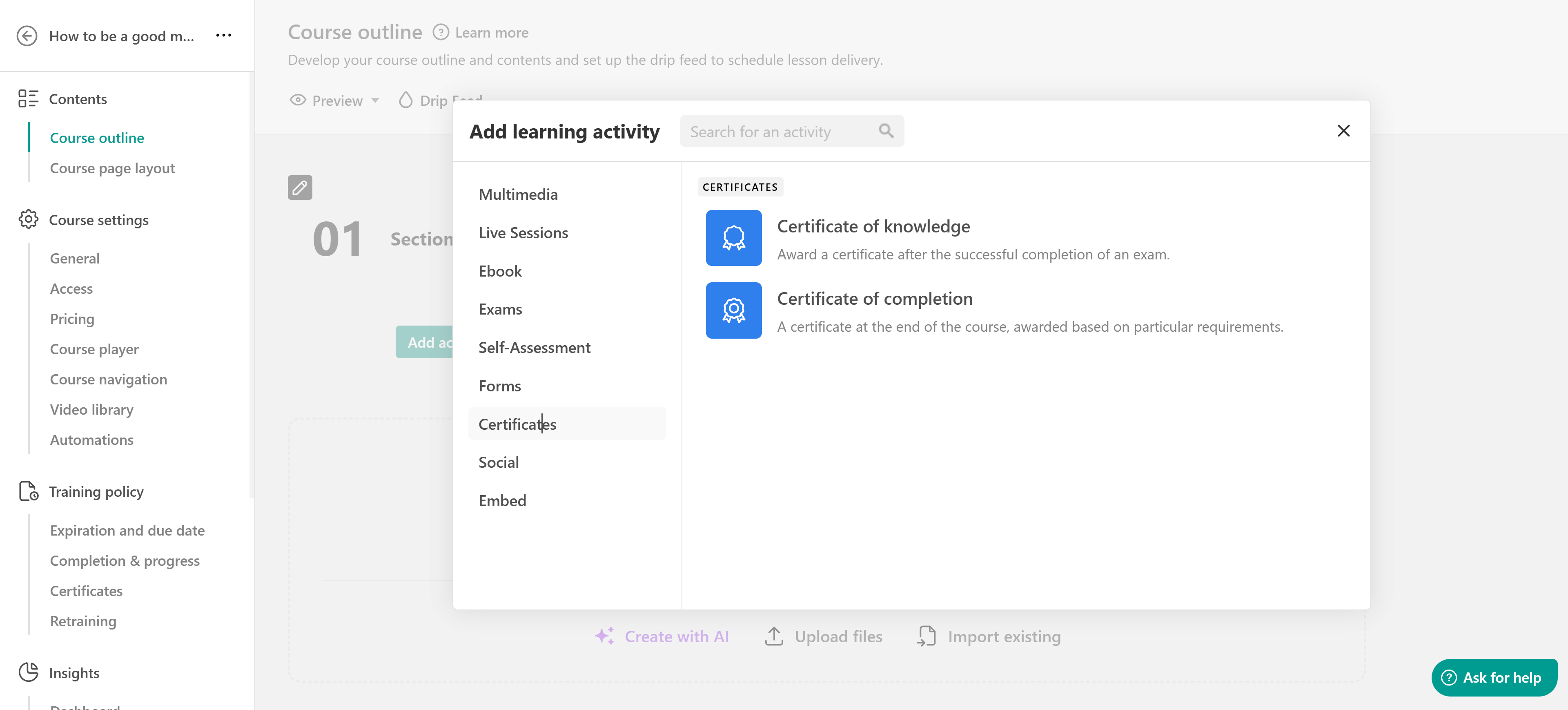
Your course's certificates can also be created and edited under Training policy → Certificates.
Set up the certificate of completion
After creating the activity, open its Settings. If you selected Save & Edit when creating it, you can configure these settings directly.
From the certificate settings, customize the certificate details, define what learners need to do before they can earn it, configure its expiration, select the certification provider and template, and adjust other activity settings.
Add the certificate details
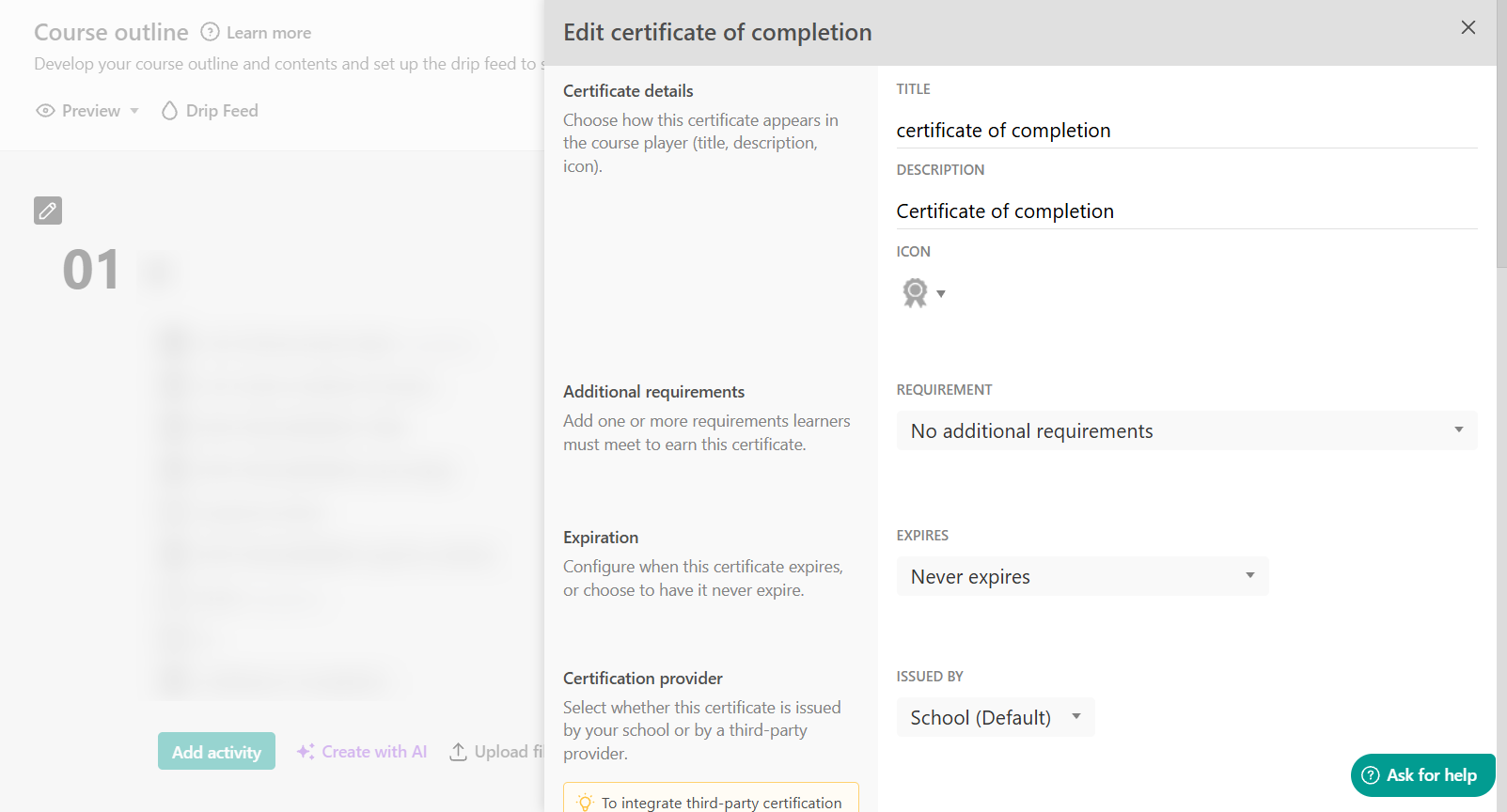
Under Certificate details, configure how the certificate activity appears in the Course Player. You can customize the:
- Title
- Description
- Icon
Define the certificate requirements
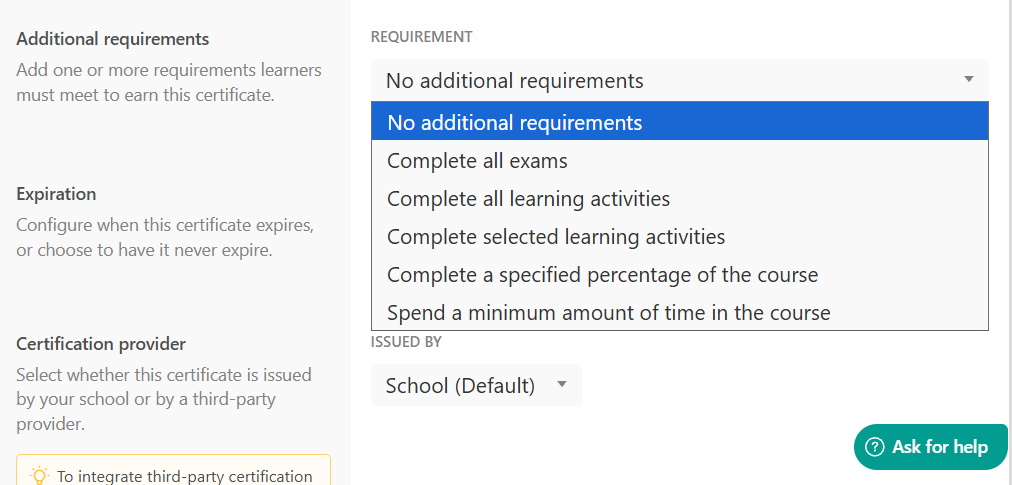
Under additional requirements, choose what learners need to complete before they can earn the certificate. You can select:
- No additional requirements: Learners do not need to meet any additional course requirements before claiming the certificate.
- Complete all exams: Learners must successfully complete all exams in the course.
- Complete all learning activities: Learners must complete all learning activities in the course.
- Complete selected learning activities: Select the specific activities learners must complete.
- Complete a specified percentage of the course: Define the percentage of the course learners must complete.
- Spend a minimum amount of time in the course: Define the minimum amount of time learners must spend in the course.
Once learners meet the configured requirements, they can claim their certificate. Claiming the certificate completes the Certificate of Completion activity.
Configure certificate expiration
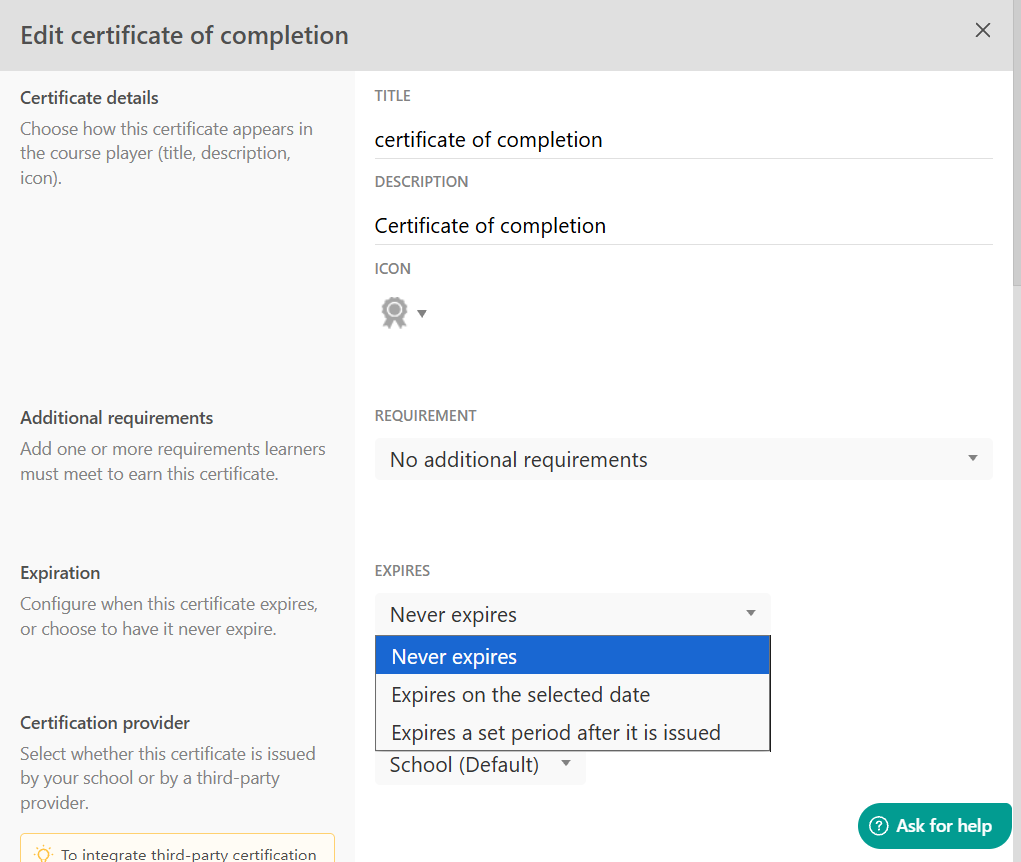
Under Expiration, choose how long the certificate should remain valid. You can select:
- Never expires: The certificate remains valid without an expiration date.
- Expires on the selected date: Set a specific date on which the certificate expires.
- Expires a set period after it is issued: Define how long the certificate remains valid from the date it is issued.
Certificate expiration can be useful when learners need to renew a certification periodically .
If learners need to repeat training when their certificate expires, use Retraining and select Certificate expiry as the retraining trigger. This starts a new training cycle based on the retraining settings you configure.
Choose the certification provider
Under Certification provider, choose whether the certificate is issued by your school or by a connected third-party certification provider. School (Default) uses your LearnWorlds school as the certificate provider. To use a supported third-party provider, connect it from Settings → Integrations → Digital credentials, then select it as the provider for the certificate.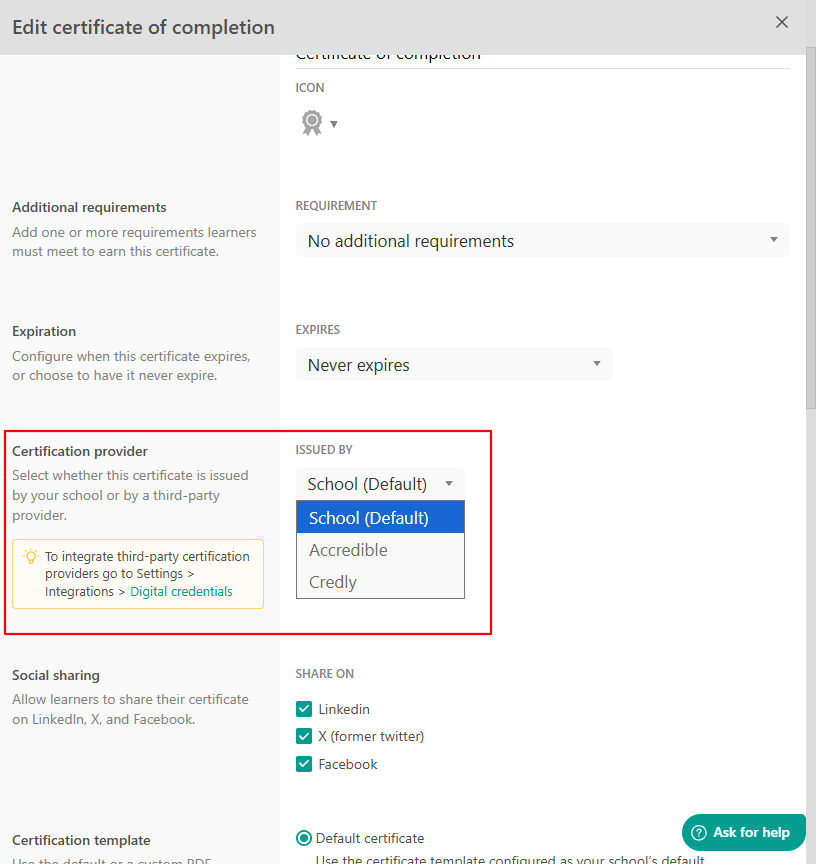
Choose the certificate template
Under Certification template, choose the template learners receive:
- Default certificate: Uses the certificate template configured as your school's default.
- Custom certificate: Overrides the school default with a custom PDF template for this certificate.
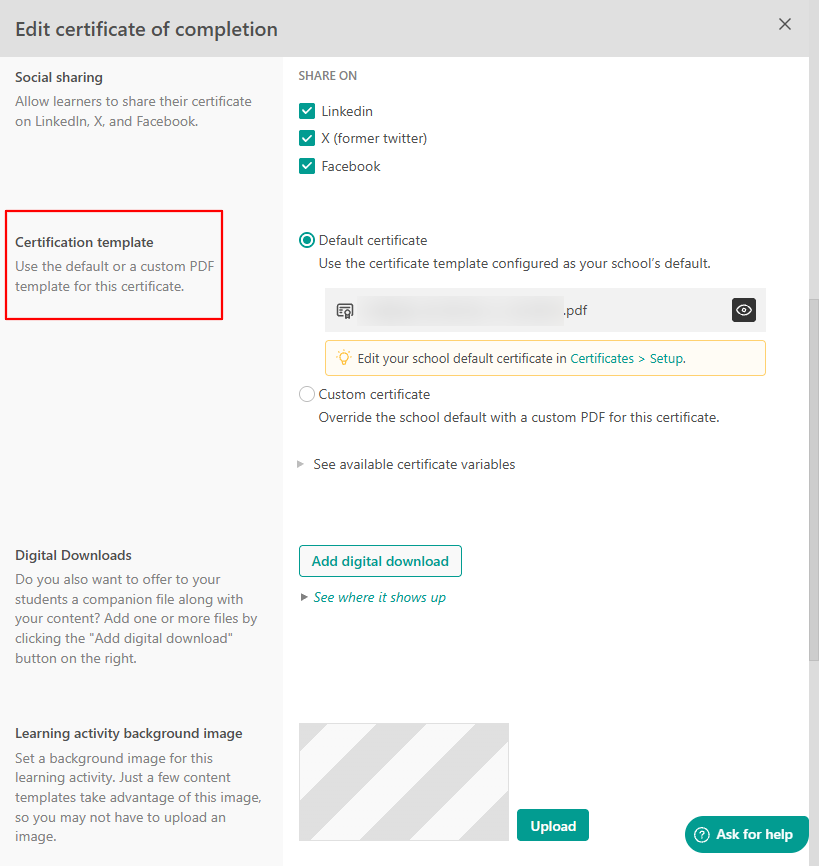
Manage your school's default certificate under Courses & Programs → Certificates → Setup. This template can be used across your school unless you choose a custom template for an individual certificate.
If you use a custom certificate, you can create a fillable PDF and map learner and course information to the certificate using PDF keys. LearnWorlds supports default and custom certificate templates, with custom PDFs using dynamic fields to populate certificate information.
 If a custom PDF is not uploaded, the default certificate template is used.
Under the certificate's settings, you can also add a digital download, password-protect the activity, and upload a background image.
Customize the certificate
After you create the certificate of completion, hover over and click on Edit certificate to customize the experience learners see when claiming their certificate.

You'll be redirected to the editor, where you can further customize the certificate and its content.
Customize certificate candidate details
Customize the information learners provide when claiming their certificate, such as their name or other personal details used to personalize the certificate.
Unlike Certificates of Knowledge, a certificate of completion is not based on its own certification exam. Learners can instead be asked to provide their details before claiming the certificate.
Certificate fields can be used to collect information and, when using a custom certificate template, populate corresponding fields in the certificate PDF.
Available fields include:
- First & Last name: Collect the learner's name for the certificate.
- Short text: Ask learners to provide a short response.
- Dropdown: Let learners select from predefined options.
- Date: Let learners select a date.
- Consent: Ask learners to accept one or more consent options. You can also apply tags based on their responses.
- Content block: Add supporting content to the certificate screen.
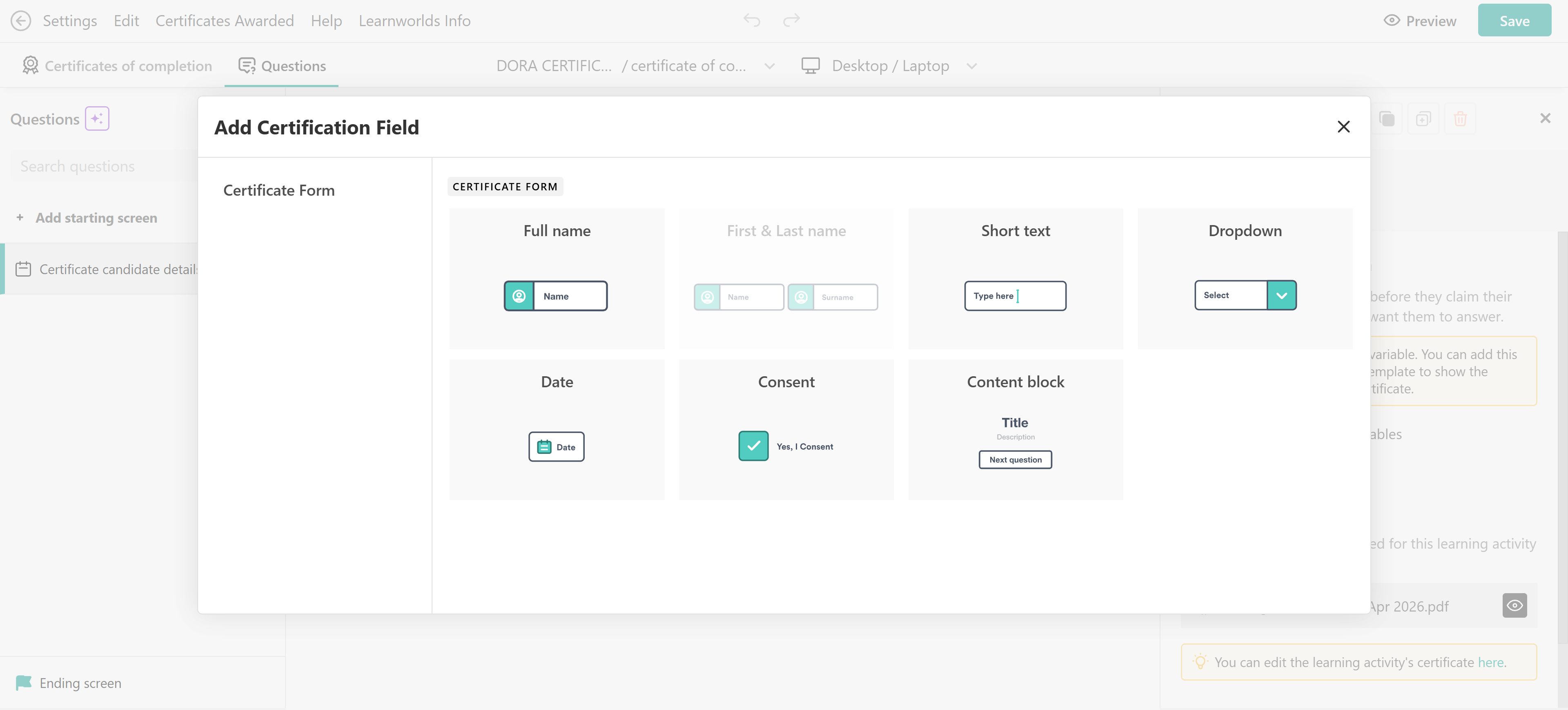
You can add multiple certificate fields depending on the information you need.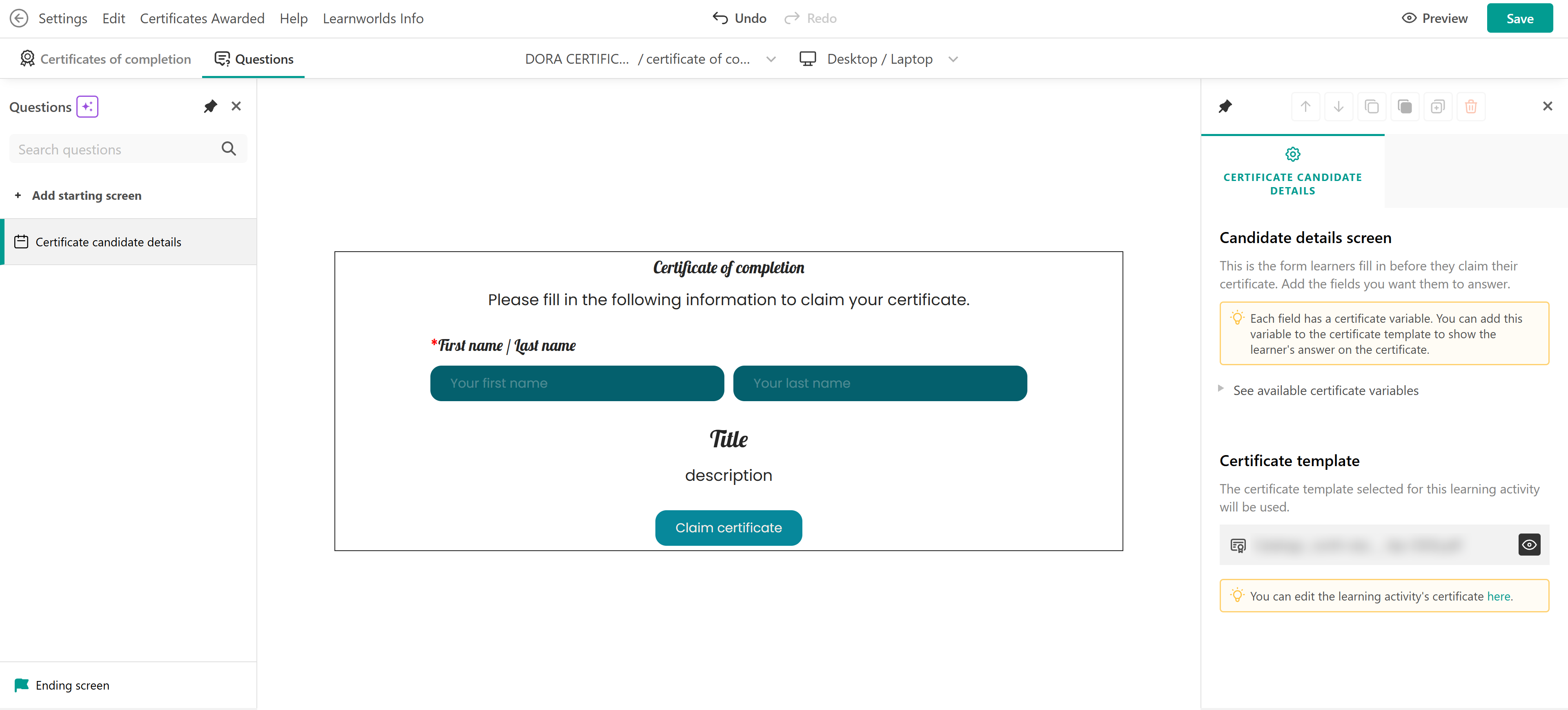
Use PDF keys with a custom certificate
When using a custom PDF certificate, certificate fields should be mapped to your PDF template using PDF keys. For example, if a certificate field uses the PDF key cert_dropdown, the corresponding field in your PDF template must use the same key for the learner's response to appear correctly.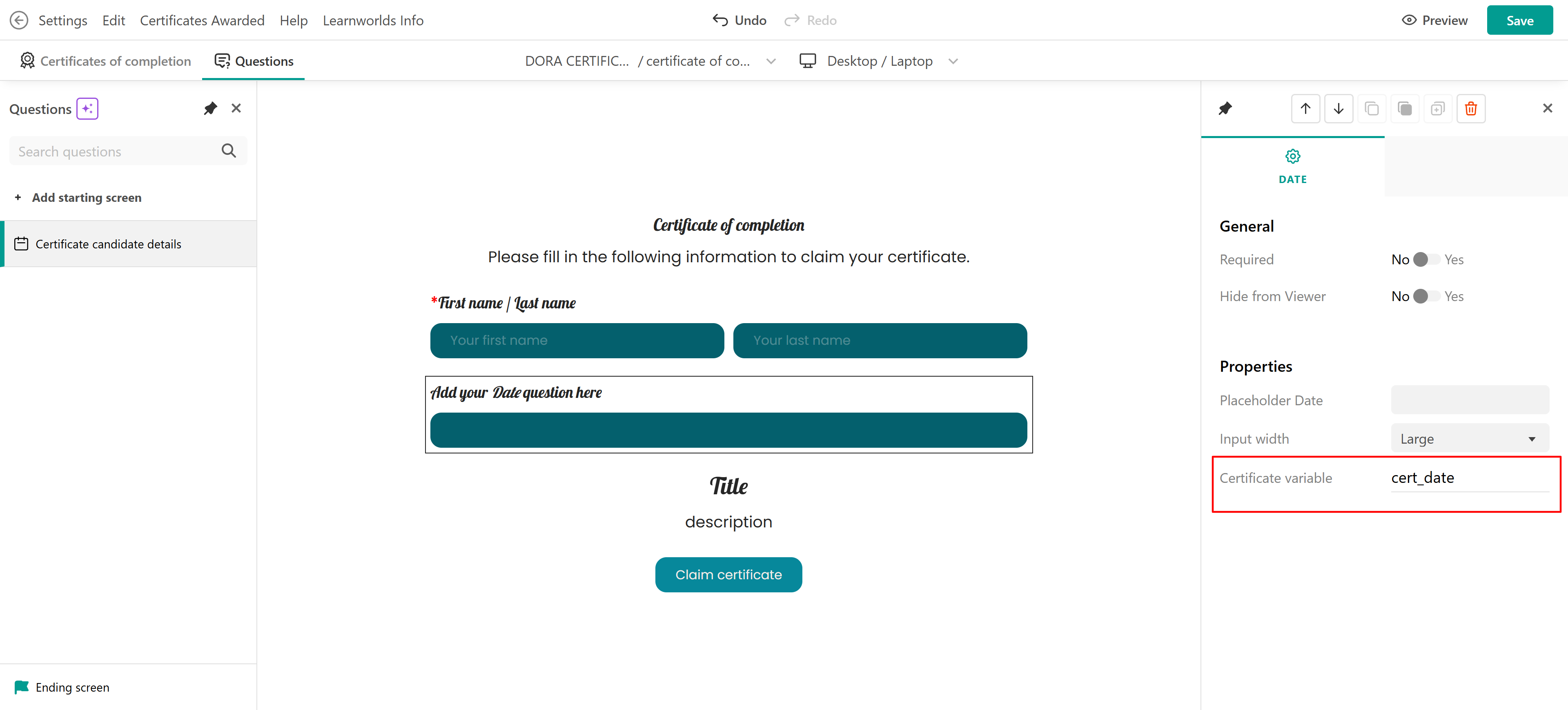
PDF key field names are case-sensitive and must exactly match the fields in your certificate template.Learn how to create a custom PDF certificate via external fillable PDF editors in this article (available in the Pro Trainer plan or higher).
Customize the starting and ending screens
You can also enhance the learner experience by customizing the Starting and Ending screens shown before and after the certificate is claimed
The Starting screen appears before learners claim their certificate. Customize its content by adding or editing available widgets, such as text, buttons, images, and embedded content. The Starting screen can also be removed and added again when needed.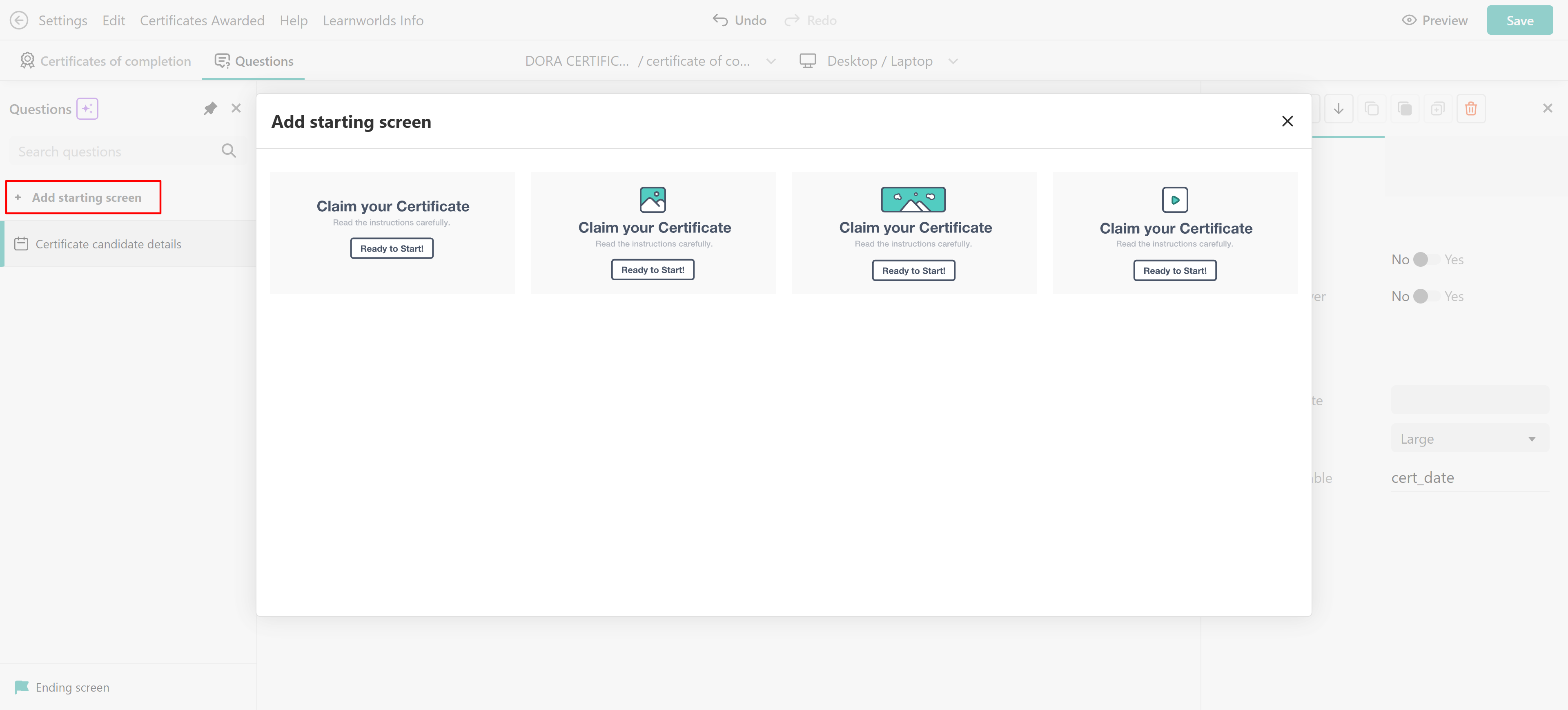
The Ending screen appears after learners submit their details and receive their certificate. Customize its content to provide additional information or next steps after the certificate is issued.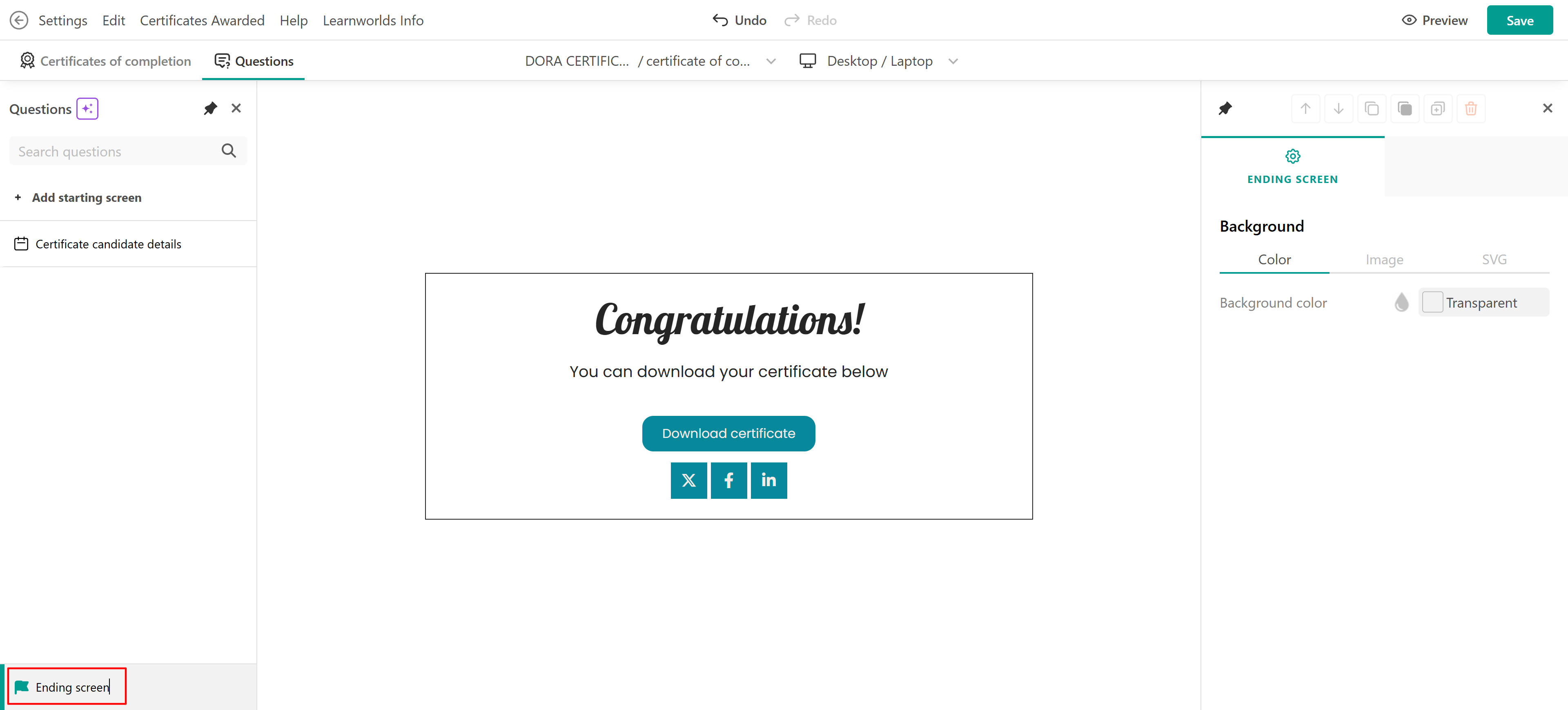
Add widgets
Add widgets to further customize the certificate experience. Hover over the area where you want to add content and select the + icon. Depending on the screen, you can add elements such as text, buttons, images, and embedded content.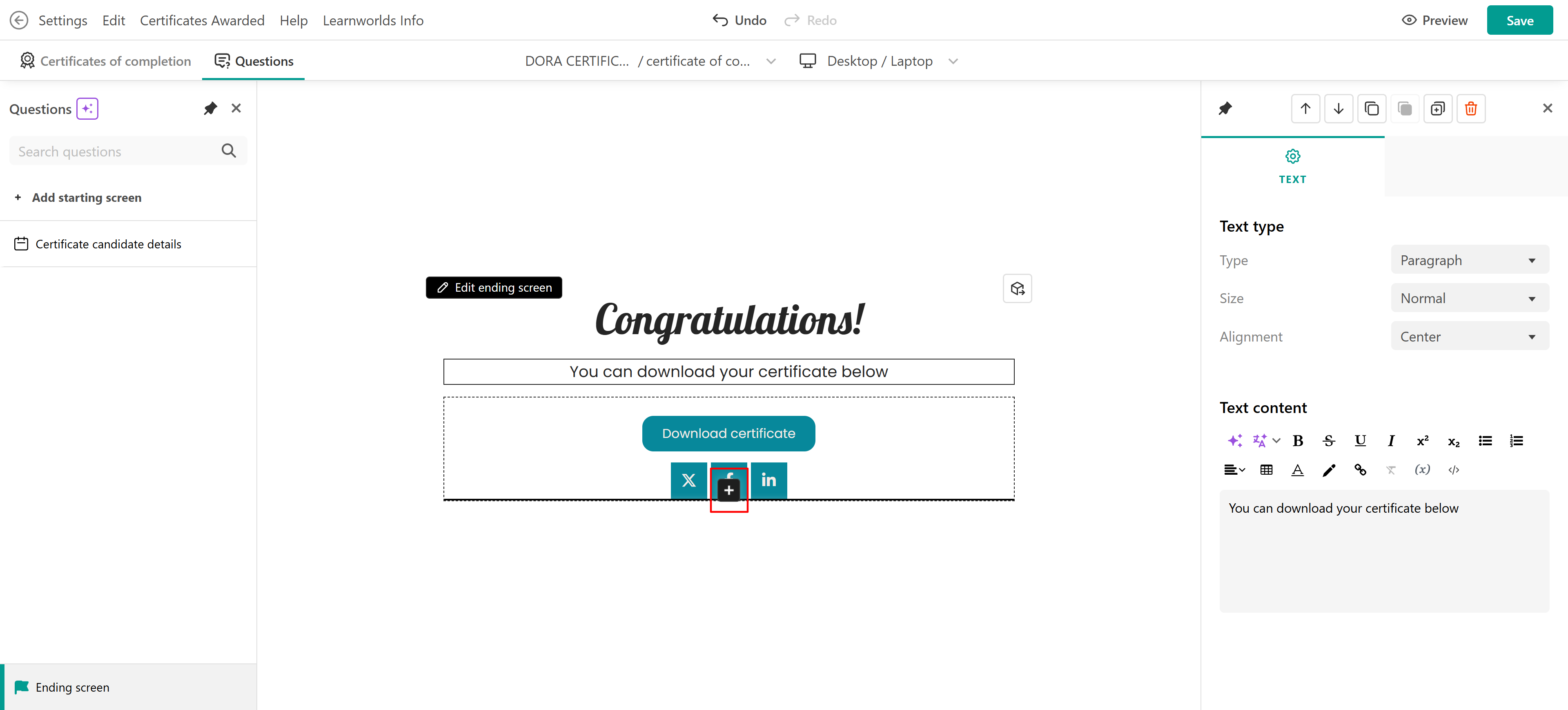
Configure language and social sharing
You can configure the language used for the Certificate of Completion interface and allow learners to share their certificates on Social Media.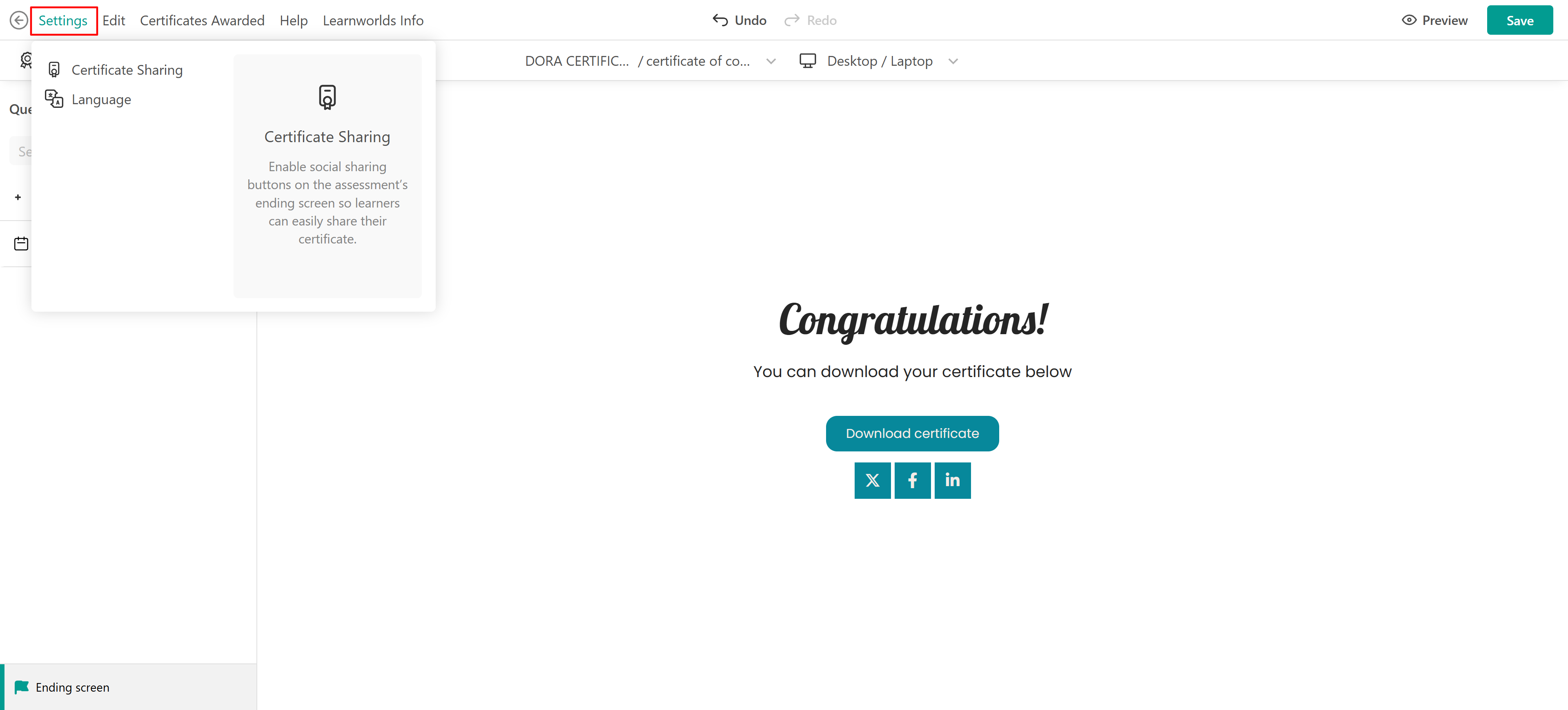
Manage issued certificates
Go to Courses & Programs → Certificates to view the central record of certificates awarded across your school. From here, review certificate details and status, search and filter records, export certificate data, and manage individual certificates.
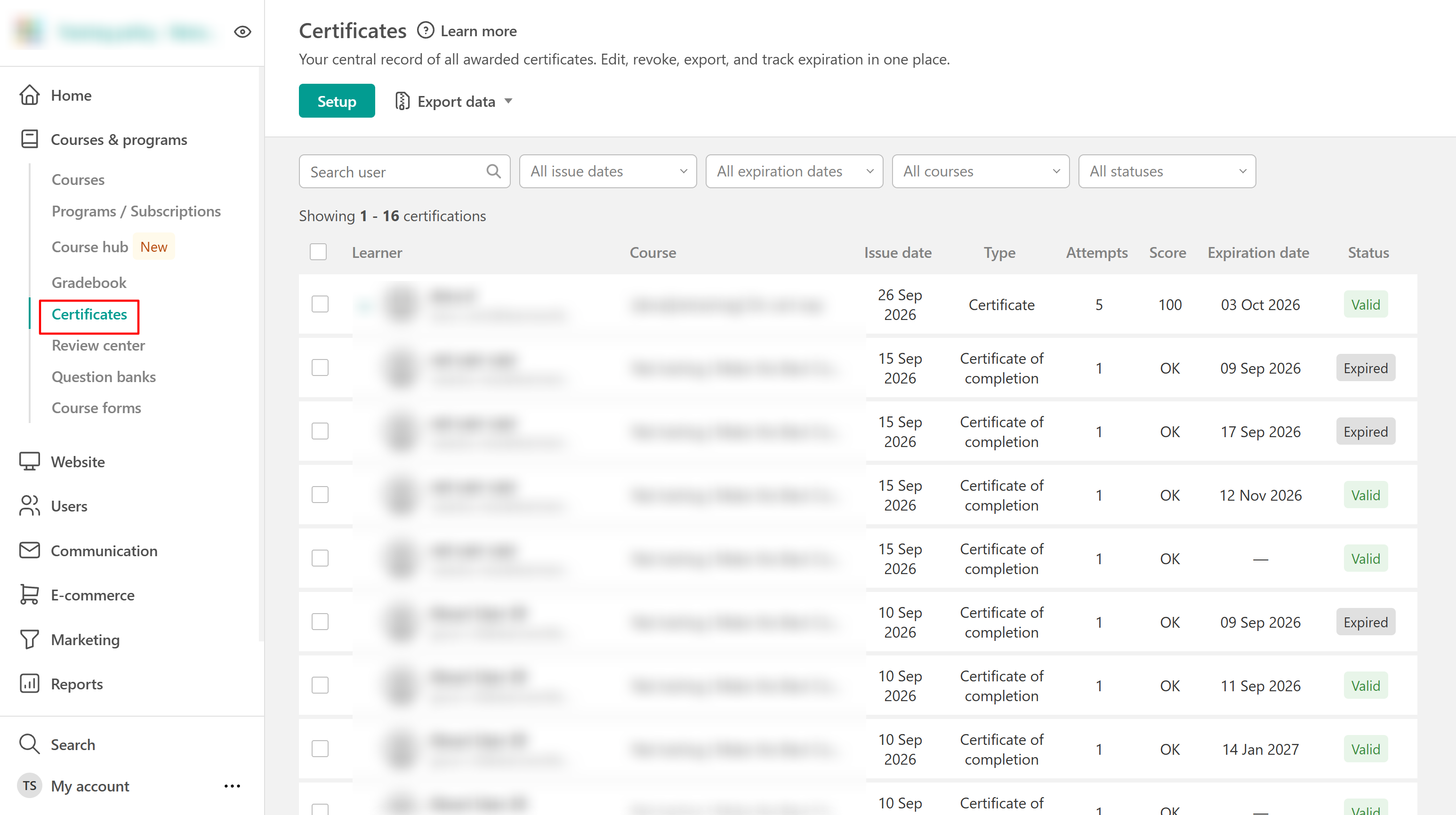
Under Setup, enable certificate verification to allow issued certificates to be verified through a public verification page. For setup instructions, see this guide this guide.
For certificates issued for a specific course, navigate to Insights → Certificates awarded.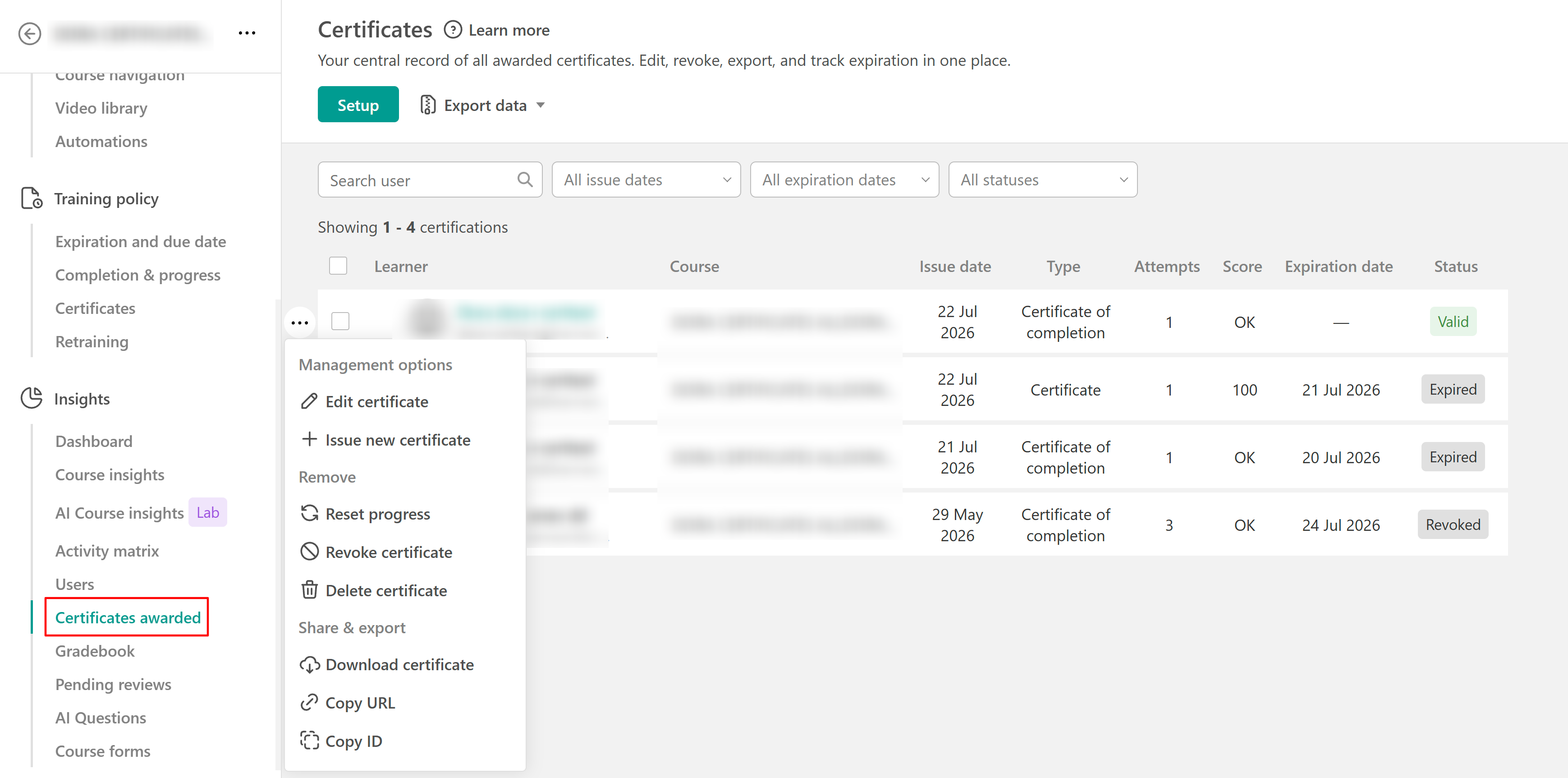
For more information about managing issued certificates, see this guide.
- Admins cannot be issued a certificate, even if they are enrolled in a course. Any certificate generated through an admin submission is a dummy certificate, used solely for testing or preview purposes.
- Each learner can download the earned certificate unlimited times with their submitted personal details on it (Name, Surname, Date of completion, Score, etc.) either from the course player, my certificate or their profile page.
- Learner names aren’t added automatically—they must be entered manually before claiming the certificate.
- The certificate PDF itself is not automatically uploaded to the social platform; learners can download it separately if they want to include the file in their post.